Showing posts with label abraham lincoln. Show all posts

21 March 2011

Review of The Rise and Fall of Society by Frank Chodorov

This book is too important not to review. It's five-star anarcho-capitalist literature.

This book is so good, even the foreword, acknowledgement, and introduction blow you away. The first sentence blows you away: "It is hard to think of an age which, with less reason, has been more smugly self-satisfied than ours." Chodorov wrote this book in 1959! Chodorov laments the distortion and outright denial of truth in favor of self-worship of the State. Chodorov vows to defend the individual and natural law.

We move on to the acknowledgement, in which Chodorov explains that the purpose of the book is to continue the work that Albert Jay Nock started in Our Enemy, the State. In the introduction, Chodorov rages against the idea that the purpose of the individual is to play a role within the collective. Statism—the worship of political power—has become the religion of the modern day. The State and Society were once clearly distinguished, but they no longer are. Abraham Lincoln immortalized the connection with the phrase, "government of the people, by the people, for the people." In democracy, "freedom" comes from government.

And now we begin chapter one. The common thinking is that economics is a branch of political science. Economics is, indeed, a science. Politics is not; it is simply control over other people. History has demonstrated that every attempt by politicians to interfere with the laws of economics has failed. Yet, today's efforts by politicians to disobey the laws of economics are perhaps stronger than ever. The State always fails, because it overlooks the consequences of its actions. Every State in history has failed because it has increasingly attempted to interfere in the economy. The founders of America understood this fact, and they attempted to prevent its happening by writing the Constitution. Yet, this brilliant document has been interpreted into irrelevance. America will end up like Rome. When the parasitic State finally collapses the Society on which it depends, the State destroys itself.

Chapter two examines the origin of the State. In classic theory, the State came from God. Later, Hobbes theorized that the State arose as an authority to restrain humans from their "brutish" nature. Locke theorized that the State arose to protect private property. Rousseau theorized that the State arose to help overcome the difficulties of nature. Today's theorists automatically accept the State and focus on how to improve it. Chodorov, however, takes a historical approach. He argues that the State arose when herdsmen (raisers of livestock) attacked the desirable land owned by agricultural workers. Eventually, instead of merely killing the males, the herdsmen formed a master-slave relationship with them—the rulers and the ruled. The rulers exacted tribute from the ruled. From there, the herdsmen realized the importance of 'protecting' their people from other herdsmen. As time went on, the two classes interacted more and became a homogeneous culture, but the master-slave relationship continued.

Chapter three explains that it is the logical nature of an individual to pursue economics. Unlike other animals, a human is not content with mere food and shelter. A human has an infinite desire for happiness. A human uses reason to transform commodities in an effort to become happier. For example, a human may transform land and grow food on it rather than continuously search for food. A human is, by nature, a capitalist—a producer of capital. But, a human seeks to satisfy those infinite desires via the least amount of labor necessary (the law of parsimony). Technology constantly improves for this reason.

Chapter four explains that Society is a collection of individuals rather than a singular collective. Society has no attributes that we would attribute to an individual. It's a word. When individuals cooperate, they find that they can produce more than twice as much as would be produced by the individuals alone. Cooperation within a sufficiently large Society allows people to become specialists. A tailor, who finds it quite easy and enjoyable to make clothing, produces numerous high-quality shirts because the tailor expects to engage in voluntary economic exchange with the other people in the Society. But, it is not Society that produces anything; the individuals are the producers. The individuals work in order to satisfy their own desires—not for the benefit of Society.

Chapter five expands on the concept of the marketplace. The market is the heart of Society—where the specialists make exchanges. Value cannot be expressed with mathematical formulas. Value is subjective; it is determined by each individual. There is no data to give to a central planner that can predict future values. No one knows exactly what they will want in the future. A central planner will never succeed in telling individuals what they should want (e.g., drugs) or at what price a product should sell (e.g., gasoline). All that a central planner can do "successfully" is decrease an individual's production. A central planner robs a producer of money—the medium of exchange. The individual's pursuit of happiness is disrupted.

Chapter six explains that trade is an attempt by both parties involved to increase their happiness. The specialists trade their abundances for things that they believe will make them happier. And as trades occur all over the world, people exchange culture and ideas. The marketplace is the unifier of the world. Any act that disrupts a marketplace (e.g., a protectionist tariff) is an act of war. Whereas free trade brings people together, coercively restricting trade tears people apart. The most effective way to bring about global peace is to remove restrictions on trade.

Chapter seven discusses competition in the marketplace. In Society, there will likely be more than one weapon producer, for example. Competing producers are driven by the self-interest of profits to be skilled relative to the other competitors. A competitor who offers higher quality at a lower price can drive the inferior competitor out of business. The community will not show loyalty to an inferior product. Profits, therefore, are a measure of the skill of a producer to supply the demands of a Society. Everyone in a Society benefits from competition. If a hypothetical inferior producer used force in order to induce scarcity and create a coercive monopoly, however, only the inferior producer would benefit. Unfortunately, politics allows exactly this scenario to occur. For those who complain about big business against small business, Chodorov points out that the mass production of the big business is very inflexible. The small business can adapt and supply what the big business does not. Competition is always better than force. But a free-market Society has not yet existed, because of the State.

Chapter eight begins the examination of the State. Authority is the imposition of one's will on another person's will. It can be defensive (e.g., using a gun in self-defense), but authority always means the use or threat of force. The individual, however, usually does not desire to devote constant time and effort solely to the defense of their property. Other individuals feel the same way. And so, they form a 'government'—an entity that uses force to protect everyone's private property. Because of inevitable questions of proper ownership, government becomes a judge, as well. Government produces nothing; it is simply given a monopoly on coercion in order to prevent other community members from committing coercive acts. In a long discussion of property, Chodorov points out that producers don't produce for money but for the things that money will buy—what other people are producing. When a person is deprived of their property through coercive force, they are unable to exchange. The thief—who produces nothing—will also be unable to exchange when there is nothing left to steal. The producers, then, find their products underconsumed. With no one to exchange with (as a result of lack of property rather than lack of desire to exchange), the producers must stop producing. If theft is rampant, the Society must collapse, because mere spending doesn't stimulate output.

Chapter nine explains that after the State has stretched taxation to the limit, it borrows. And rather than repay its debt, the State monetizes it with inflation. (Again, this book was written more than 50 years ago.) The best that we can hope for from politicians is that they not interfere with the market. But, as production increases, they always interfere. They rob the producers. The more productive a Society is, the more the State's penchant for predation will increase. Because, as the law of parsimony states, humans seek to increase their happiness with the least amount of labor necessary. In a democracy, it is common for the criminal psychopaths of Society to be drawn to the positions in which they have control over other people.

Chapter ten opens with a discussion of the Judges of the Israelites. Before the arrival of the kings, the Judges were leaders rather than rulers; they did not hold coercive power. It was, instead, a position of social suasion. But the Israelites eventually demanded a king. Samuel attempted to warn them of the consequences: conscription, servitude, bureaucracy, confiscation, and taxation. But, it was a time of emergency, and the Israelities were willing to give up freedom (permanently) for the feeling of security. Fear led them to put blind faith in the State. And so, Saul became king, and the Israelites' troubles rapidly multiplied. And with the next king, David, the throne becomes divine, separated from 'ordinary' people. Solomon, then, consolidated power. There is no 'right person' to be in charge of the State, which is not an inanimate, impersonal institution. The State is one or more individuals. These seemingly divine individuals hold power over people by convincing them that the State provides necessary social services. In reality, the State robs the people for its own growth, protection, and deification.

Chapter eleven reiterates that the State is a coercive gang of people who falsely proclaim to provide 'social services.' A person who provides 'social services' is a person who devotes their time to satisfying human desires—a successful producer. The 'social services' provided by the State are chosen by the State rather than Society. The use of coercion entails that Society has no say in the matter. In the United States, first-class mail delivery is a 'social service' because the State has a coercive monopoly on it. In communism, the State is relied upon for all 'social services.' When the State provides these 'social services,' it does not care whether its income exceed its losses, because it can make up the difference with taxes. It has no incentive to perform well. Well-intentioned people believe control over water, sanitation, roads, education, and so on should belong to the State because everyone in the community benefits from those services. But any service could and would be done more efficiently if privatized. The State operates these services merely to make itself look useful while increasing its own power. It creates more opportunities to tax.

Chapter twelve slams the socialist notion that the State is the antidote for all evil. Socialists worship the State. Any supposed flaws in the State are because of those devilish capitalists. These reformers believe that one day the omnipotent, omniscient State will be realized, as long as the State's power is continuously increased. Individualistic thought must be crushed. The law must compel people to change their wicked ways. These fools succeed in increasing the State's power, but that is all. The Biblical story of Joseph and the Pharaoh is an example. Politicians adopt socialist ideas not because they truly believe in them but because they are so obviously beneficial to the State. The politicians create laws that benefit themselves. The bureaucrats ('civil servants') carry out the laws. The bureaucrats are well-paid by the State for assisting in the predation of Society. The bureaucrats are socialists. There have been many reforms (e.g., the income tax) in the history of the United States, and they all increased the State's power rather than achieving their intended purpose. There is a vast bureaucracy in the United States.

Chapter thirteen explains that political interference in the market is no different in consequences than a raid on the market by bandits. The difference is in supposed intent. The bandits do not pretend to be moral, whereas the State does. The people believe the State. If they did not, the State could not exist. Taxation causes shortages because production suffers. The argument that the State provides protection from other States is flawed. Does it particularly matter which State is robbing the people? They would be better off if they were not robbed at all. As discussed in chapter ten, giving up freedom for a sense of security is a foolish idea. The only tool in the State's kit is force. When the State interferes in the market, it excludes competition and creates shortages. Anything supposedly advantageous to Society (e.g., rent control, minimum wage, etc.) is, in fact, disadvantageous. Market mechanisms are self-operating. The State's laws cannot control human behavior.

Chapter fourteen declares that the State is always at war with Society, regardless of size. The State will always intervene in the market, and the State is always corrupt. Chodorov uses the example of the New York City subway, which was originally private. Because of political force, it was impossible to raise the price of fare. The city bought the subway at a price far higher than the open market offered. It became a bureaucrat-run monopoly. The fares rose, and taxpayers must make up the constant deficits. The State gained power. The politicians will utilize the popular socialist notion of 'soaking the rich' because the politicians know how beneficial it is to the State. The larger a Society becomes, the more distant the politicians become from the people. There is less and less social persuasion affecting the politician's actions. The purpose of centralization (see Abraham Lincoln) is to create protective distance between the State and Society. The US Constitution was a brilliant attempt to prevent centralization, but it failed. The Sixteenth Amendment was the death blow. Taxation is key to centralization.

Chapter fifteen attempts to solve the problem of State v Society. Chodorov wonders whether there is any solution at all, but suggests that human reason may provide the answer. Reason indicates that cooperation multiplies satisfactions. It is superior to self-sufficiency. But a human still dreams of getting something for nothing. When humans who make up 'government' are given a monopoly on the use of coercion (in order to protect production), they will naturally abuse this power and seek to get something for nothing. They cannot resist using their power to interfere in the market. They become the State. Chodorov suggests that the State is made in the image of humans, who dream of getting something for nothing. Humans are predatory. Social suasion, however, restrains this predation. Thus, Chodorov proposes accepting government at an extremely decentralized level. He repeats that the best that we can hope for out of politics is that it do its intended job of preventing disruption to production. Chodorov argues that as long as government is deprived of the ability to tax at will, it cannot transform into a powerful State.

26 December 2009

A Libertarian Ranking of the United States Presidents

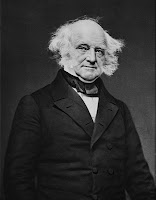
Martin Van Buren: America's best president.Note: I have updated the list on 16 January 2013 to rate the entirety of Barack Obama's first four years as president. His score is -292, making him currently the second-worst President ever. But he is on pace to easily surpass George W. Bush's eight-year score of -332.

Note 2 (22 April 2022): Joe Biden is not on the list, but he is already the worst president ever.

I enjoy reading rankings of the American presidents. But, it's very difficult to find libertarian presidential rankings. (I found only one online that is decent, but there is also a book.) Most rankings are problematic because they reward successful conquests and legislating as much as possible. Shouldn't presidents be commended for not killing people and for giving us as much freedom as possible? Another problem is that we rarely read about what presidents actually did. All we read is the twisted propaganda (e.g., Lincoln preserved the nation, FDR got us through the Great Depression). And so, my goal in this article, which took about 60 hours of research over two months to create, is to (1) objectively rank the 43 US presidents from best to worst by libertarian standards and (2) summarize and score the actions that they took.

The Greats

None.

The Near Greats

1. Martin Van Buren (1837-1841)
Good: Deregulated finances (+5), supported gold and silver as money (+7),[1] advocated lower tariffs (+4) and free trade (+4), opposed war abroad (+8),[2] kept federal troops out of Mormon War (+9), laissez-faire policies during Panic of 1837 (+9).[3]
Bad: Implemented Trail of Tears (-10).[4]
Score: 34

2. Grover Cleveland (1885-1889, 1893-1897)
Good: Vetoed hundreds of pension expansion bills and other wasteful spending (+9), fought against numerous tariffs (+7), fought valiantly for gold standard (+10), despised imperialism and prevented American colonialism in the Congo (+10),[5] appointed government employees by merit (+5), reduced number of government employees (+4),[6] refused to annex Hawai'i (+9).[7]
Bad: Created Interstate Commerce Commission (-2), Dawes Act (-3), Scott Act (-3), used Army to forcefully stop Pullman Strike (-10), pushed Britain out of Latin America with interventions/threats (-10).[8]
Score: 26

3. John Tyler (1841-1845)
Good: Vetoed Third Bank (+9) twice,[9] vetoed tariff bill (+5),[10] ended Second Seminole War (+7), held back federal troops in Dorr Rebellion (+7), established trade with China (+2),[11] established role of Vice President while fending off Henry Clay (+2).[12]
Bad: Annexed Texas (led to war with Mexico) (-10).[13]
Score: 20

4. Calvin Coolidge (1923-1929)
Good: Oversaw Roaring Twenties (+5) and budget surpluses (+5), reduced national debt somewhat (+3), almost no inflation despite existence of Fed (+4),[14] resisted federal crop pricing (+5),[15] despised and minimized regulation (+9),[16] massively decreased income taxes but raised estate tax and created gift tax (+5),[17] granted citizenship to Native Americans (+1),[18] anti-war but pro-self-defense Kellogg-Briand Pact (+9),[19] withdrew from Dominican Republic (+8).[20]
Bad: Signed race-based Immigration Act of 1924 (-2), mismanaged Great Mississippi Flood of 1927 (-3), supported Mexico against rebels (-10) and maintained occupations of Nicaragua (-10) and Haiti (-10).[21]
Score: 19

5. Zachary Taylor (1849-1850)
Good: Clayton-Bulwer Treaty (+8), stopped Narciso López's filibustering expedition to Cuba (+9), opposed Compromise of 1850 (+1).[22]
Bad: Nothing.
Score: 18

6. Ulysses S. Grant (1869-1877)
Good: General Mining Act of 1872 (+9), supported equal rights for blacks and Native Americans (Fifteenth Amendment) (+4), favored but failed to institute civil service reform (+1),[23] vetoed Inflation Bill of 1874 (+7), cut taxes (+6), lowered debt (+3), fired 2,248 government employees (+6),[24] de facto gold standard (+8),[25] Specie Payment Resumption Act (+7), avoided war with Spain/Cuba despite Virginius Affair (+9),[26] peaceful Treaty of Washington (+6).
Bad: Created Office of Solicitor General (-1), left Reconstruction violence problems to state militias instead of Army but kept some federal troops in South (-2),[27] Ku Klux Klan Act that suspended habeas corpus (-9), wanted to annex Dominican Republic (-10),[28] intervened in Liberian-Grebo War (-10), Comstock laws (censorship) (-5), anti-Mormon Poland Act (-8), Civil Rights Act of 1875 (-9), numerous scandals (-2).[29]
Score: 10

7. Warren G. Harding (1921-1923)
Good: Swiftly ended severe depression of 1920–1921 by cutting spending (+7) and taxes (+7) and refusing to intervene in private economy (+9), leading to Roaring Twenties (+7),[30] pardoned Wilson's political prisoners (+2), signed peace treaties to end WWI (+3), called Washington Naval Conference for worldwide naval disarmament (+8),[31] immigration quota (+3),[32] Budget and Accounting Act of 1921 (+1), wise Supreme Court choices (+2), supported blacks' rights (+2).[33]
Bad: Created Dept. of Veterans Affairs (-4),[34] protectionist Fordney-McCumber Tariff (-6), regulation/tax on grain futures (-4),[35] appointed allies who were involved in Teapot Dome Scandal (-2),[36] continued occupations of Dominican Republic (-10), Haiti (-10), and Nicaragua (-10).
Score: 5

The Average

8. Andrew Johnson (1865-1869)
Good: Vetoed post-war military occupation (+9), vetoed 14th Amendment for honorable reasons (+3), rightly fired Edwin Stanton (+1),[37] granted amnesty to Confederates (+2).[38]
Bad: Expansionist/costly Purchase of Alaska (-2), interfered with French in Mexico (-10).[39]
Score: 3

9. Millard Fillmore (1850-1853)
Good: Appointed Brigham Young as governor of Utah (+2),[41] didn't interfere in Europe (+9),[42] initiated White House library.[43]
Bad: Supported Compromise of 1850 (-1),[44] threatened to bomb Japan (-8).[45]
Score: 2

10. Chester A. Arthur (1881-1885)
Good: Ended spoils system with Pendleton Act (+6), lowered tariffs (+2),[46] advocated International Meridian Conference (+1).
Bad: Anti-Mormon Edmunds Act (-5), racist Chinese Exclusion Act (-3).
Score: 1

11a. William Henry Harrison (1841-1841)
Good: Did no damage.
Bad: Nothing.
Score: 0

11b. James A. Garfield (1881-1881)
Good: Favored gold/silver as money (+2).
Bad: Didn't care for Mormons (-2).[47]
Score: 0

13. Rutherford B. Hayes (1877-1881)
Good: Ended Reconstruction and withdrew federal troops (+9),[48] vetoed inflationary Bland-Allison Act (+5).
Bad: Used federal troops to murder 70 striking workers (-10),[49] wanted to control Panama Canal (-5),[50] banned sale of alcohol at Army forts (-1).[51]
Score: -2

The Below Average

14. John Quincy Adams (1825-1829)
Good: America "goes not abroad, in search of monsters to destroy" (+9).[52]
Bad: Supported American System (-9), enraged South with Tariff of 1828 (-7).[53]
Score: -7

15a. Thomas Jefferson (1801-1809)
Good: Reduced taxes (+6) and paid down national debt (+8),[54] banned slavery in Northwest Territory (+7).[55]
Bad: Started Barbary Wars (-10),[56] unilaterally purchased Louisiana Territory (-5),[57] advocated Indian removal (-8),[58] Embargo Act of 1807 (-9).[59]
Score: -11

15b. Gerald Ford (1974-1977)
Good: Tax Reduction Act of 1975 (+5), urged end to domestic oil price controls (+4),[60] refused to bail out bankrupt New York City (+9),[61] supported women's rights (+3),[62] helped expose (+8) and limit (+10) CIA activities,[63] helped create Human Rights Watch (+10),[64] legalized private gold ownership (+10).[65]
Bad: Supported Indonesian genocide in East Timor (-10),[66] 5 percent tax surcharge (-4),[67] urged deadly H1N1 vaccinations (-4),[68] Education for All Handicapped Children Act (-2), forceful rescue during Mayaguez_Incident (-10), requested huge financial aid for Southeast Asia (-10), vetoed end to military aid to Turkey (-10), gave in to Israel's request for US$2.59 billion in aid (-6),[69] funded Kurdish rebellion in Iraq (-10),[70] railroad subsidies (-4).[71]
Score: -11

17. Franklin Pierce (1853-1857)
Good: Opposed Civil War (+6),[72] installed heating in White House,[73] reduced national debt (+4).[74]
Bad: Ostend Manifesto (attempted annexation of Cuba) (-10), expansionist Gadsden Purchase (-2), caused Bleeding Kansas (-10).[75]
Score: -12

The Failures

18a. George Washington (1789-1797)
Good: Foreign policy of neutrality (+10),[76] set precedent for constitutional veto power (+9),[77] left office after two terms (+5).[78]
Bad: Created First Bank (-8), appointed Alexander Hamilton Secretary of the Treasury (-9),[79] introduced national draft (-10),[80] Fugitive Slave Act of 1793 (-5), used federal military to crush revolt against whiskey tax (-10).[81]
Score: -18

18b. James Monroe (1817-1825)
Good: Improved relations with Britain after war (+4),[82] did basically nothing in response to Panic of 1819 (+10).
Bad: Declared war on Seminole (-10) and Creek (-10) Indians in Spanish Florida (-10),[83] Monroe Doctrine (-2).[84]
Score: -18

20. James Buchanan (1857-1861)
Good: Refused to use force to stop Southern secession (+9).[85]
Bad: Pushed in favor of Dred Scott Decision (-2),[86] protectionist Morrill Tariff (-7),[87] anti-Mormon Utah War (-10),[88] supported pro-slavery Lecompton Constitution in Kansas (-3), ran deficits when hard money was accepted (-8).[89]
Score: -21

21. John Adams (1797-1801)
Good: Nothing.
Bad: Unconstitutional Alien and Sedition Acts (-9),[90] appointed John Marshall to Supreme Court (-5),[91] Quasi-War (-10).
Score: -24

22. James K. Polk (1845-1849)
Good: Supported Jacksonian economic policies (+9).[92]
Bad: Started war with Mexico (-10) and lied about it (-3),[93] provoked Britain in Oregon Territory negotiations (-8),[94] tried to buy Cuba (-10),[95] created Dept. of Interior (-3).[96]
Score: -25

23. William Taft (1909-1913)
Good: Peaceful free-trade treaties (+8).[97]
Bad: Added more tariffs with Payne-Aldrich Tariff Act (-6),[98] 80 antitrust suits (-4),[99] Dollar Diplomacy (-10), blatantly selfish intervention in Nicaragua (-10),[100] Sixteenth Amendment (-9),[101] white supremacist (-2).[102]
Score: -33

24. Andrew Jackson (1829-1837)
Good: Believed in hard money (+9),[103] paid off national debt (+10), refused to recharter Second Bank (+8).[104]
Bad: Forced removals of Choctaw (-10), Creek (-10), Chickasaw (-10), Cherokee (-10), and Seminoles (-10),[105] threatened war with South Carolina over tariff (-7),[106] instituted spoils system (-6).[107]
Score: -36

25. James Madison (1809-1817)
Good: Nothing.
Bad: Started War of 1812 (-10),[108] Creek War (-10), occupied Spanish Florida (-10),[109] created Second Bank of the United States (-9).[110]
Score: -39

26. Jimmy Carter (1977-1981)
Good: Deregulated oil prices and telecommunications (+6),[111] ended occupation of Panama Canal (+8),[112] wanted to withdraw from South Korea (+4),[113] sought disarming of nuclear weapons (+8),[114] Voyager Golden Record (+1).
Bad: Caused gasoline shortage (-7), funded Mujahideen (-10), signed FISA (-9) and CRA (-9),[115] backed Indonesia's genocide in East Timor (-10),[116] accelerated inflation but appointed Volcker to stop it (-4),[117] wanted to control prices (-8),[118] bailed out Chrysler (-8),[119] allowed Iran hostage crisis (-4).[120]
Score: -42

27. John F. Kennedy (1961-1963)
Good: Wanted to dismantle CIA (+5), refused to attack/send troops to Laos (+8), refused to bomb/invade Cuba during Cuban Missile Crisis (+8), wanted to abolish nuclear weapons and signed Partial Test Ban Treaty (+9),[121] attempted to prevent future bankruptcy with Executive Order 11110 (+4).[122]
Bad: Went along with CIA's disastrous Bay of Pigs Invasion (-10), state-sponsored terrorism in Cuba (-10),[123] costly/failed "Alliance for Progress" in Latin America (-9), created Peace Corps (-3), funded/lied about successful South Vietnamese coup (-10),[124] fully supported coup in Iraq (-10),[125] spendy/foolish New Frontier programs (-9), sent 3,000 troops to protect James Meredith (-6),[126] wiretapped Martin Luther King, Jr. (-4),[127] influenced steel prices (-4),[128] violated Native Americans' rights by constructing Kinzua Dam (-5), costly/nonsensical "space race" (-4).[129]
Score: -50

28. William McKinley (1897-1901)
Good: Kept federal troops out of the South (+3),[130] Gold Standard Act (+9).
Bad: Annexed Hawai'i (-10),[131] signed the highest tariff to date (Dingley Act) (-7), contrived Spanish-American War (-10) in order to conquer Guam (-10), Puerto Rico (-10), Cuba (-10), and the Philippines (-10),[132] ensuing Philippine-American War (-10), sent American troops to crush Boxer Rebellion (-10).[133]
Score: -75

29. Benjamin Harrison (1889-1893)
Good: Installed electricity in White House.[134]
Bad: Spendy Dependent and Disability Pension Act (-6), protectionist McKinley Tariff (-6), subsidized sugar (-5),[135] anti-capitalist Sherman Antitrust Act (-9),[136] supported free silver/Sherman Silver Purchase Act and depleted gold supply (-8)[137] attempted to establish naval base in Haiti (-10), seized Canadian ships in fishing dispute (-10), intervened in Chilean Civil War (-10), attempted annexation of Hawai'i (-10),[138] Morrill Land-Grant Act of 1890 (-2).[139]
Score: -76

30. George H. W. Bush (1989-1993)
Good: START I nuclear disarmament treaty with USSR (+7).
Bad: Broke promise and raised taxes (-7) in order to support increased spending (-7), increased welfare (-5), increased unemployment benefits (-5),[140] Americans with Disabilities Act (-6), regulatory Clean Air Act (-2), invaded Panama in order to remove Manuel Noriega from power (-10),[141] Gulf War (-10),[142] Andean Initiative (anti-drug military funding abroad) (-10),[143] intervened in 1989 Philippine coup attempt (-10), Operation Restore Hope in Somalia (-10), NAFTA (reduced tariffs but increased regulation and moved toward world government) (-3).[144]
Score: -78

31. Theodore Roosevelt (1901-1909)
Good: Mediated Treaty of Portsmouth to end Russo-Japanese War (+4).
Bad: Created regulatory state via Meat Inspection Act (-6), Pure Food and Drug Act (-6), and railroad-killing Hepburn Act (-8), filed antitrust suit against Northern Securities Company (-6), desired war with numerous countries (-7), white supremacist (-2), brutal war against the Philippines (-10), unilaterally took over customs houses in Dominican Republic (-10), sent out entire battle fleet in order to intimidate Japan (-7), supported Panamanian rebels (-10) in order to build Panama Canal for America (-10),[145] high protectionist tariffs (-5), spendy/damaging "conservation" policies (-5), pushed for income tax (-6),[146] threatened to use Army to seize coal mines (-7).[147]
Score: -101

32. Herbert Hoover (1929-1933)
Good: Withdrew troops from Nicaragua (+8) and Haiti (+8), wanted to reduce world's navy (+6), mediated Treaty of Lima (+3).[169]
Bad: Told businesses not to reduce wages (-9),[170] Children's Charter that made government instead of parents responsible for children (-9),[171] expanded civil service (-4), 5.3 million acres for national parks/forests (-4), doubled veterans' hospitals (-2), created antitrust division (-6), air mail regulations (-3), proposed Dept. of Education (-5), pro-union Norris-La Guardia Act (-5),[172] loans to failed businesses (-9), unemployment relief (-8), farm subsidies (-6), price controls (-9),[173] white supremacist (-2),[174] Davis-Bacon Act (-6), Mexican Repatriation (-10), Smoot-Hawley Tariff (-8), Federal Home Loan Bank Act (-5), Revenue Act of 1932 (-8), Bonus Army (-10).
Score: -103

33. William J. Clinton (1993-2001)
Good: Utilized and promoted Internet technology (+4),[175] Defense of Marriage Act (left same-sex marriage laws to the states) (+7),[176] Taxpayer Relief Act of 1997 (+3), Personal Responsibility and Work Opportunity Act (improved but did not end welfare) (+6), supported Comprehensive Nuclear Test Ban Treaty (+5).
Bad: Family and Medical Leave Act of 1993 (-5),[177] 1993 World Trade Center Bombing (-10),[178] Brady Bill (-9),[179] health care reform attempt (-9), skyrocketed EITC socialism (-9),[180] caught lying about Monica Lewinsky affair (-2),[181] created SCHIP (-9), Digital Millennium Copyright Act (-8),[182] INS raid on Elián González (-6), Violent Crime Control and Law Enforcement Act (-9), Communications Decency Act (attempted to regulate Internet) (-6), increased minimum wage (-9),[183] Iraq Liberation Act (-10), Battle of Mogadishu (-10), non-combatant intervention in Rwanda (-4),[184] bombed Afghani civilians (-10) and a Sudanese pharmaceutical factory (-10),[185] bombed Yugoslavia (-10),[186] military intervention in Haiti (-10),[187] Waco Siege (-10),[188] regulatory "free trade" agreements (-5).[189]
Score: -145

34. Dwight D. Eisenhower (1953-1961)
Good: Swiftly ended Korean War (+10),[190] did not intervene militarily in Hungarian Revolution of 1956 (+5).[191]
Bad: Arpaio-like fascist crackdown on "Mexican-looking" people (-8),[192] sent federal troops to protect Little Rock Nine (-7), government ownership of interstate highways (-7),[193] minor increase to debt despite efforts to balance budget (-2),[194] created SEATO (-7) and CENTO (-7), Pact of Madrid (-6), Operation Ajax (1953 Iranian coup d'état) (-10), Operation PBSUCCESS (1954 Guatemalan coup d'état) (-10), CIA intervention in Cuba/attempted assassination of Castro (-10),[195] Operation Blue Bat (sent Marines to suppress uprising against pro-American president of Lebanon) (-10), CIA assistance during Congo Crisis (-10), sent first soldiers/assistance to South Vietnam (-7),[196] strong-armed Britain/France/Israel to end Egyptian invasion during Suez Crisis (-1), document NSC 162/2 (built up and threatened attacks with nuclear weapons) (-9), 1960 U-2 incident (-8), created NASA in response to Sputnik (-7), signed Internal Revenue Code of 1954 (up to 91 percent income tax) (-9),[197] paranoid criminalization of joining Communist Party (-8),[198] created Dept. of Health, Education, and Welfare (-9), appointed Earl Warren to Supreme Court (-9).[199]
Score: -146

35. Richard Nixon (1969-1974)
Good: Lowered absurd defense spending level (+5),[200] opened normal relations with China (+8),[201] SALT I (+7),[202] ended draft (eventually) (+9).[203]
Bad: Bombed Cambodia (-10), Laos (-10), and Vietnam (-10),[204] continued Vietnam War for five years (-10),[205] increased Social Security (-8) and Medicare (-8) payments, billions of dollars more for food aid/public assistance (-8),[206] instituted multiple disastrous wage and price freezes (-9),[207] openly Keynesian and destroyed/inflated the dollar (-10) by eradicating the gold standard (-10),[208] 10 percent tax on all imports (-9),[209] created DEA (-9), EPA (-9), OSHA (-9), and CPSC (-9),[210] expanded "civil rights" (-9) and created affirmative action (-9),[211] continued costly/nonsensical "space race" (-4),[212] supported Pakistan/genocide against India (-10),[213] increased federal employees' wages (-4),[214] support for Israel (-9) that caused 1973 oil crisis (-9),[215] 55-MPH speed limit (-2),[216] Watergate (-5).
Score: -170

36. Lyndon B. Johnson (1963-1969)
Good: Freedom of Information Act (+5), significant income tax cut (+5).[217]
Bad: Mammoth 25 percent chicken tax (-7), egalitarian, divisive, freedom-killing Civil Rights Act of 1964 (-9),[218] Voting Rights Act (-9), Fair Housing Act (-9),[219] Age Discrimination in Employment Act (-9), Food Stamp Act (-9), Economic Opportunity Act (-8), Higher Education Act (-7), created Medicare (-10) and Medicaid (-10), Public Broadcasting Act (-7),[220] Elementary and Secondary Education Act (-9),[221] Gun Control Act (-9),[222] Immigration and Nationality Act (-9),[223] continued costly/nonsensical "space race" (-4),[224] sent in federal troops to deal with urban riots and wanted to spend billions more to 'solve' the problems (-10),[225] contrived, interventionist, costly Vietnam War (-10),[226] murdered/disabled millions of Vietnamese civilians with bombs/Agent Orange (-10),[227] drafted 2.2 million Americans (-10),[228] provoked USSR (-4),[229] milk co-op corruption (-3), continued wiretapping of Martin Luther King, Jr. (-4),[230] supported overthrow of democratically elected leaders of Dominican Republic (-10)[231] and Brazil (-10).[232]
Score: -186

37. Woodrow Wilson (1913-1921)
Good: Nothing.
Bad: Created Federal Reserve (-10), created federal income tax (-10),[233] Adamson Act (imposed eight-hour workday) (-8), Clayton Antitrust Act (-8), unnecessarily entered Europe's war (-10),[234] created League of Nations (-9), Espionage Act of 1917 (-9), Sedition Act of 1918 (-9), militarily forced Nicaragua (-10) and Haiti (-10) to do what he wanted,[235] brutal occupation of Dominican Republic (-10),[236] sent troops to Mexico (-10)[237] and Russia (-10),[238] created Federal Trade Commission (-8), socialist Federal Farm Loan Act (-8), Prohibition (-9), caused disastrous Treaty of Versailles (-10),[239] Harrison Narcotics Act (-9),[240] draft (-10),[241] Palmer Raids (-9), white supremacist (-2).[242]
Score: -188

38. Harry S Truman (1945-1953)
Good: Integrated armed forces (+3),[243] chose Berlin Airlift over more threatening options (+2).
Bad: Dropped a nuclear bomb on Hiroshima (-10) and Nagasaki (-10), demanded Japan's unconditional surrender (-3),[244] seized control of railroads (-8) and threatened to draft striking railroad workers (-9),[245] fathered "containment" by giving US$400 million to Greece (-10) and Turkey (-10) to "fight communism," created CIA for expensive, secret wars (-10), US$17 billion Marshall Plan for Europe (-9), joined NATO military alliance (-6), massive Keynesian increase in military spending (-8), unconstitutional Korean War (-10), gave France US$500 million per year to fight Ho Chi Minh (-10), wanted to seize meat industry (-4), seized steel industry (-8), created concept of ridiculously costly Third World aid (-9), created Israel in order to win Jewish votes (-10), endorsed vindictive Nuremberg trials (-2), Operation Keelhaul (-10), corrupt administration (-2),[246] proposed national health insurance (-5),[247] Housing Act of 1949 (-7), Social Security Act of 1950 (-7), high inflation (-5), supported creation of UN (-8),[248] draft (-10).[249]
Score: -195

39. Ronald Reagan (1981-1989)
Good: Fired 11,359 striking federal air traffic union employees after giving them a fair warning (+8), loosened national 55-MPH speed limit law (+2).[250]
Bad: Intervened in Lebanese Civil War (-10),[251] intervened in Iraq-Iran War (-10),[252] Iran-Contra Affair (-10), bombed Libya (-10),[253] invasion of Grenada (-10), funded murderous military groups in Colombia (-10), El Salvador (-10), Guatemala (-10), Panama (-10),[254] Honduras (-10),[255] Nicaragua (-10), Afghanistan (-10), Mozambique (-10), Angola (-10), and Cambodia (-10),[256] crackdown/war against "all drugs" (-9),[257] claimed to lower taxes while raising them, especially for Social Security (-7),[258] massive spending that tripled debt from US$1 trillion to US$3 trillion (-9),[259] increased government regulation (-4), expanded government departments (-4), encouraged inflation (-5), protectionist trade policies (-8), expanded foreign aid (-8), heavy restrictions on "sinful" choices (smoking/drinking/pornography) (-8).[260]
Score: -202

40. Franklin D. Roosevelt (1933-1945)
Good: Economy Act (cut federal salaries and veteran payments) (+5), vetoed Bonus Bill (+3), approved abolishment of Prohibition (+5),[261] completed end to occupation of Haiti (+7).
Bad: Seized gold from citizens (-9) and forbid owning it (-9),[262] suspended gold standard (-9) and revalued gold from US$20.67 to US$35 after Treasury had taken it (-9),[263] took control of banks (-9),[264] Agricultural Adjustment Act that forced up prices (-8) while destroying farmland/animals (-7), federal monopoly of bungling Tennessee Valley Authority (-7),[265] insane National Industrial Recovery Act that created 500 cartels (-9),[266] National Labor Relations Act (surged labor costs) (-7), US$3.3 billion Public Works Administration (-4), National Recovery Administration featuring price-fixing (-9) and minimum wages (-8), blatantly coercive, ruinous, Madoff scheme known as Social Security (-10), Works Progress Administration, Civilian Conservation Corps, etc. (costly pointless temp jobs) (-6),[267] created SEC (-9),[268] United States Housing Authority (-9), extreme tax increases (-9),[269] allowed Pearl Harbor (-10) in order to enter WWII (-10),[270] German-American internment (-9), Italian-American internment (-9), Japanese-American internment (-10), drafted 10 million Americans (-10),[271] complete firebombing of Dresden (-10), ended two-term limit (-3),[272] Marihuana Tax Act of 1937 (-7), authorized Manhattan Project (-10).
Score: -215

41. Abraham Lincoln (1861-1865)
Good: Did not finish second term.
Bad: Started catastrophic war (-10) in order to prevent freedom to secede (-10), murdered 350,000 Americans (-10), white supremacist who did not care about slaves and tried to deport all blacks to Liberia (-9), destroyed 10th Amendment (-9), suspended habeas corpus (-9), Union blockade (-5), imprisoned 15,000 political opponents without a trial (-9), shut down newspapers (-8), restricted firearm ownership (-8), rigged elections (-4), started draft (-10) and murdered its protesters (-10), divided Virginia for electoral advantage (-6), ordered destruction (-9), plundering (-9), rape (-9), and murder (-10) of Southern civilian towns,[273] used European mercenaries (-6),[274] Chicago machine "pay to play" politician (-2),[275] nationalized railroads (-7), anti-capitalist (mercantilist) policies: Morrill Tariff (-7), National Banking Act (-9), greenbacks (-9), and deficits (-7), genocidal policy toward Sioux (-10),[276] Morrill Land-Grant Colleges Act (-3), created temporary income tax in order to fund Civil War (-9),[277] made medicine contraband during war (-10),[278] attempted assassination of Jefferson Davis (Dahlgren Affair) (-10),[279] used water torture on Northern civilians (-9),[280] cotton industry takeover/cronyism (-9).[281]
Score: -261

42. Barack Obama (2009–2013)
Good: Ended moratorium on drilling (+4), New START (+1), withdrew troops from Iraq (+5)
Bad: Lied about closing Guantanamo (-10), drone strikes in Pakistan (-10), continued Afghanistan genocide (-10), auto regulations (-7), billions for "AIDS" (-5), Ledbetter Act (-3), CHIP (-4), US$787 billion ARRA (-9), major expansion of AmeriCorps (-5), furthered reliance on federal government in states with high unemployment (-6), Omnibus Appropriations Act (-5), sanctions against Iranian people (-9), murder of Somalis (-10) and Yemenis (-10), Omnibus Public Land Management Act (-4), "see something say something" police state (-9), doubled foreign aid (-10), persecution of Julian Assange (-10), tobacco regulations (-6), health care reform (-10) that coerced ownership (-10), Shepard Act (-3), Haiti aid (-2), banking regulations (-7), threw money at the worst schools (-3), Libya intervention (-10), Benghazi scandal (-10), Fast & Furious scandal (-10), EPA regulations (-8), debt ceiling drama (-5), proposed even more spending (-8), assassination of American Anwar al-Awlaki (-10), Syria intervention (-10), NDAA (-10), STOCK Act (-4), "you didn't build that" (-2), soaked the rich (-9), raised Social Security tax (-9), post-Newtown gun regulation (-10) via tyrannical executive decree (-10)[313]
Score: -292

43. George Walker Bush (2001-2009)
Good: Significant tax cuts (+5),[282] opposed Kyoto Protocol (+5).[283]
Bad: 9/11 (-10), invasion of Afghanistan (-10),[284] Military Commissions Act that ended habeas corpus (-9),[285] USA PATRIOT Act that destroyed civil liberties: spying on citizens (-9), restriction of freedom of association (-7), seizure of private "evidence" (-9), indefinite suspensions without evidence (-9), as well as various regulations/expenditures (-9), tortured prisoners (-9),[286] created No Child Left Behind (further federal control over education) (-7), Sarbanes-Oxley Act (-9), Iraq invasion (-10) and occupation (-10), created Dept. of Homeland Security (centralized police state) (-9),[287] vastly expanded Medicare (-8),[288] Energy Policy Act of 2005 (-6), $286 billion for transportation projects (-7),[289] Adam Walsh Child Protection and Safety Act (-5), spending to overthrow Iran's government (-10),[290] wasteful spending on Vision for Space Exploration (-4), steel tariff (-5), US$1 billion for tsunami aid (-1),[291] Hurricane Katrina incompetence/martial law (-4),[292] incredible spending/deficits (-9),[293] funded Somali warlords against ICU (-10),[294] supported Ethiopian invasion of Somalia (-10),[295] attempted coup in Venezuela (-10),[296] provoked Palestinian civil war after Hamas was democratically elected (-10),[297] attempted destabilization of Pakistan (-10),[298] orchestrated civic coup in Bolivia (-10),[299] Operation Pipe Dreams/expanded drug war at home (-7)[300] and militarily abroad (-10),[301] "counterterrorism" military training abroad (-10),[302] restricted Second Amendment (Project Safe Neighborhoods) (-4),[303] nationalized (-9) and bailed out (-9) economic disasters,[304] encouraged easy credit/housing bubble (-8),[305] created "free-speech zones" (-7),[306] one-million people on "no fly lists" (-9),[307] TSA searches (-7),[308] US$190 billion farm subsidies (-7),[309] Bipartisan Campaign Reform Act (-4), sought partial privatization of Social Security that would have accelerated borrowing/spending (-2),[310] no-bid contract corruption (-2),[311] vetoed less than any other President (-2).[312]
Score: -332